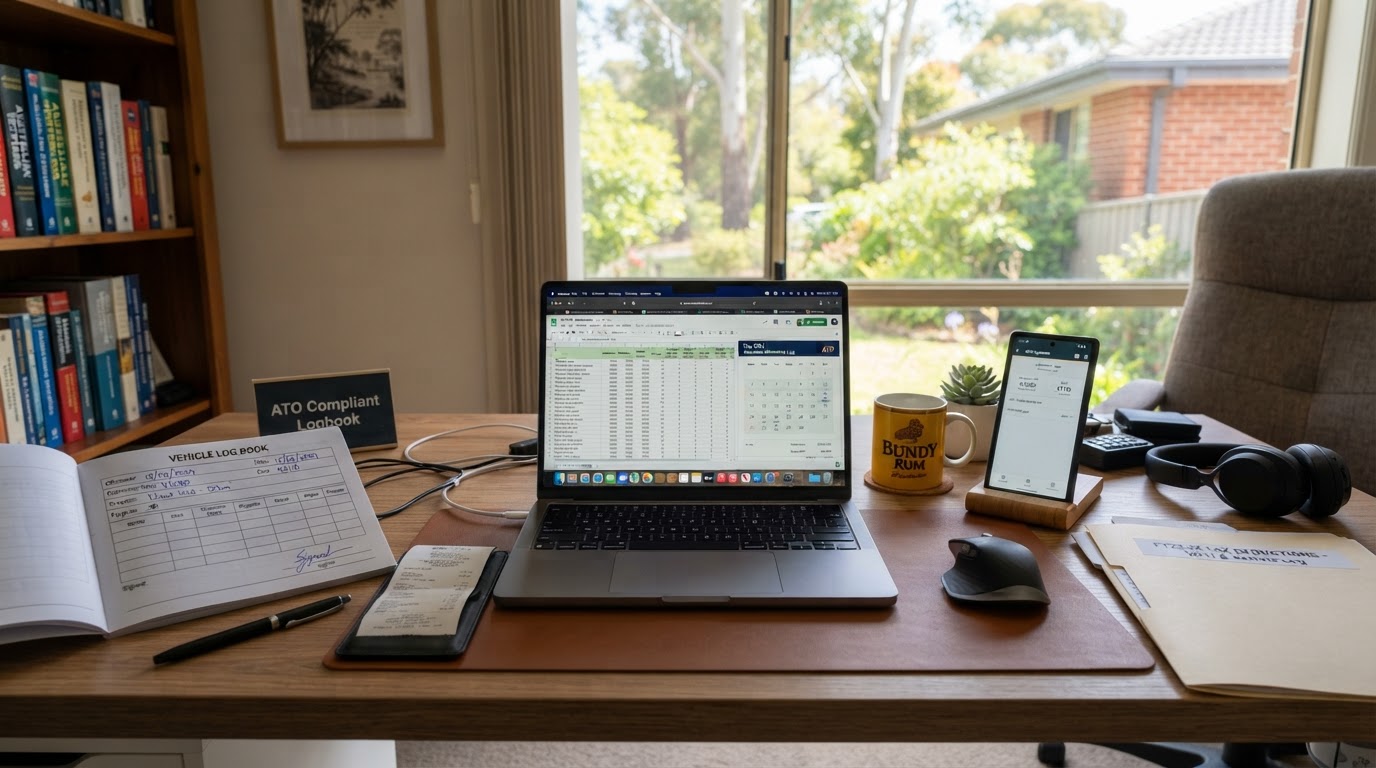
Working From Home Tax Deductions: Fixed Rate vs Actual Cost Method
A complete guide to claiming WFH expenses with the ATO: the 70 cents per hour fixed rate method versus the actual cost method, record-keeping, and equipment claims.
 Freedom Tax18 August 20266 min read
With millions of Australians working remotely or in hybrid arrangements, home-office expenses are one of the most claimed — and most scrutinised — deductions on individual tax returns. The ATO offers two methods for claiming them: the fixed rate method and the actual cost method. Both require careful record-keeping, and choosing the wrong one, or the right one with the wrong records, can leave a deduction disallowed in an audit.
The fixed rate method — 70 cents per hour
Under the fixed rate method, you claim a flat 70 cents for each hour worked from home for the 2024-25 and 2025-26 income years (the rate was 67 cents for 2022-23 and 2023-24). The single rate bundles the running costs of a home office: electricity and gas for heating and cooling, internet and mobile data, mobile and home phone usage for work, and stationery and computer consumables. You do not need a dedicated room to use it.
- You must keep a contemporaneous record of all hours worked from home — timesheets, rosters, or a diary. Estimates and representative samples are no longer accepted.
- You must keep at least one record of the running costs the rate covers (an electricity bill, an internet invoice) for the income year.
- You can separately claim depreciation on items the rate does not cover — office furniture, monitors, laptops, and stands.
If you use the 70-cent fixed rate, you cannot separately claim the phone, internet, or stationery costs already bundled into it — doing so is one of the ATO's most common audit findings.
The actual cost method
If your work-related usage of utilities or telecommunications is unusually high — for example, a heavy-user role with frequent video calls and large data transfers — the actual cost method may yield a larger deduction. You claim the actual work-related portion of each running cost, plus the decline in value of depreciating assets used for work. This method needs itemised bills, a floor-plan calculation for the home office's share of running costs, and a continuous four-week usage diary to establish your work-use percentage.
The actual cost method is more complex and more evidence-intensive, but where the claim is genuine and well-supported, it can be the larger deduction. The key is consistency: once you have calculated a work-use percentage from a four-week diary, the same percentage is generally applied for the year unless circumstances materially change.
What you cannot claim
- Costs that would be incurred whether or not you worked from home — coffee, tea, and general household cleaning
- The cost of a child's desk or equipment used by a family member
- Employer-reimbursed expenses, or items supplied by the employer
- Personal phone or internet usage unrelated to earning income
Records that survive an audit
The ATO keeps audit focus on home-office claims because the data consistently shows overclaiming. A defensible claim includes a full record of hours worked, evidence that the home office was genuinely used for income-earning activity, and bills or invoices supporting any separately claimed amount. Freedom Taxation reviews each client's working pattern and available records before lodgment, recommends the method that produces the higher compliant deduction, and retains the supporting documentation so that a request from the ATO can be answered without scrambling for receipts.
Related articles
Australian Tax Return Guide: Deductions, Lodgment Dates and ATO Rules
A complete guide to lodging your Australian individual tax return — key ATO deadlines, allowable work deductions, the Medicare levy, and lodgment options through a registered tax agent.
Read article
Understanding Australia's Tax Brackets: Stage 3 Cuts and Take-Home Pay
A complete analysis of Australia's individual income tax brackets, the Stage 3 tax cuts, the 15% rate from 1 July 2026, and how they affect your take-home pay.
Read article
Capital Gains Tax in Australia: The 50% CGT Discount and Property Rules
How Capital Gains Tax works in Australia, qualifying for the 50% CGT discount on assets held over 12 months, main residence exemptions, and the 6-year rule.
Read article