EOFY Tax Planning: Your Essential 30 June Checklist
The critical tax strategies to implement before midnight on 30 June — bringing forward deductions, super contributions, prepayments, trust distributions, and stock write-offs.
 Freedom Tax30 July 20266 min read
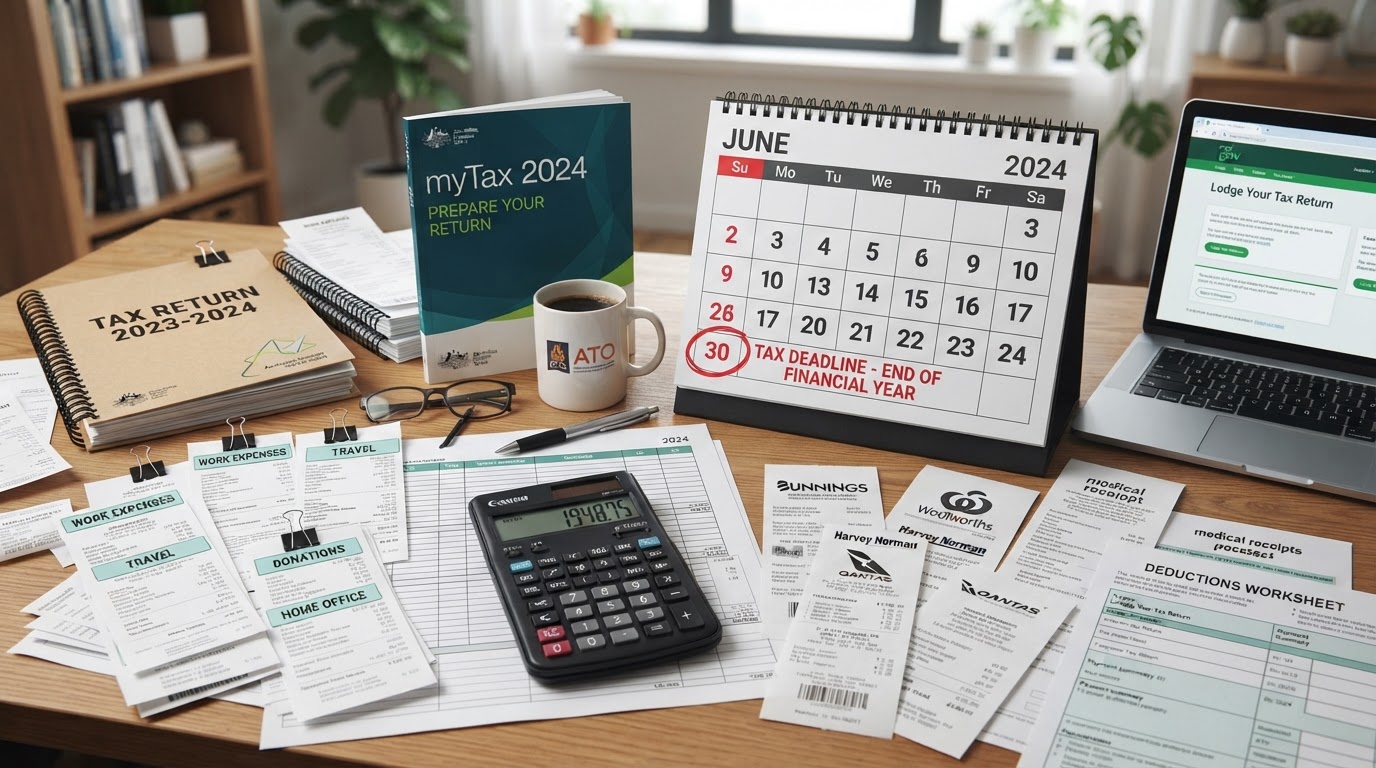
In Australia, the financial year ends at midnight on 30 June, and tax strategies that are not finalised by that moment cannot be claimed retrospectively. The weeks before year end are the single highest-leverage period of the tax year — a handful of deliberate, properly documented actions can reduce an individual's, investor's, or business owner's tax bill by thousands of dollars. The key is to plan in May and execute in June, before the deadlines close.
Top strategies to execute before 30 June
- Prepay 12 months of expenses: prepay commercial rent, insurance, or professional memberships within the 12-month rule to bring the deduction into the current year.
- Make personal deductible super contributions: ensure contributions clear your fund's bank account several business days before 30 June so they are received in the correct year.
- Write off bad debts: formally write off unrecoverable receivables in your accounting system before 30 June to reduce assessable income and, if GST-registered, reduce GST payable.
- Review instant asset write-offs: purchase and install eligible equipment under the $20,000 threshold and have it installed ready for use by 30 June.
- Obsolescence: identify and write down obsolete trading stock to the lower of cost or net realisable value before year end.
Super clearing warning: super funds can take three to five business days to clear a transfer. Waiting until 30 June to send a contribution risks it being received in July — moving the deduction, and possibly the cap, into the next financial year.
Trust distribution resolutions
Trustees of discretionary family trusts must make a written resolution determining how trust income is distributed, on or before 30 June. If no valid resolution exists, the trustee may be assessed on the trust's taxable income at the top marginal rate — an avoidable outcome that has caught many family trusts. The resolution must also be consistent with the trust deed's distribution powers and, where the ATO's Section 100A guidelines are relevant, reflect ordinary family dealing rather than a reimbursement arrangement.
Timing capital gains and losses
Because a CGT event crystallises on the contract date, the timing of a sale can move a gain into a year with a lower marginal rate, or into the same year as an existing capital loss so they offset. Where a sale straddles 30 June, the contract date — not the settlement date — determines the year. Investors with carried-forward capital losses should review whether crystallising a gain in the current year, deferring it, or offsetting it against a planned loss is the most efficient outcome.
After 30 June — what to confirm
- Single Touch Payroll finalisation declarations are lodged for each employer
- Super Guarantee payments have been received by the fund before 28 July to be deductible in the right year
- Stocktakes are completed and valued at cost or net realisable value, whichever is lower
- Any private use of business assets has been apportioned for fringe benefits tax where relevant
EOFY planning is most valuable when it starts early. Freedom Taxation runs a structured year-end review for each client — modelling projected income, available caps, carry-forward losses, and trust resolutions — so every eligible action is identified and scheduled before the deadlines close. The work done in May and June is what produces the refund in October.
Related articles

Discretionary Family Trusts: Wealth Structuring and Section 100A Rules
Understand how family trusts protect assets and distribute income tax-effectively, plus the ATO's Section 100A guidelines on adult-child distributions and reimbursement arrangements.
Read article
Australian Tax Return Guide: Deductions, Lodgment Dates and ATO Rules
A complete guide to lodging your Australian individual tax return — key ATO deadlines, allowable work deductions, the Medicare levy, and lodgment options through a registered tax agent.
Read article
Capital Gains Tax in Australia: The 50% CGT Discount and Property Rules
How Capital Gains Tax works in Australia, qualifying for the 50% CGT discount on assets held over 12 months, main residence exemptions, and the 6-year rule.
Read article